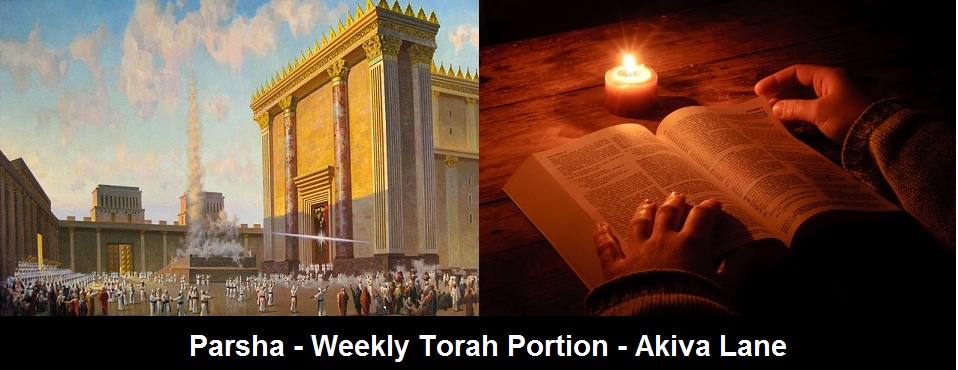
Chanukah - Breached Walls
For many years, there were two questions that I wondered about regarding Chanukah.
- When
the Nase occurred of oil burning in the Menorah for eight days, why did
it happen in the Haichel – a closed building where almost no one could
see it happen. Only the Kohen who was in charge of going into the
Haichel to light the menorah would see that it was still burning day
after day. When he came out every day saying that it was still
burning, that would certainly have a dramatic effect on the
people. But wouldn’t the Nase have had a far greater effect if it
could be witnessed by a larger number of people?
- In
Al Hanisim we say that the menorah was lit in ‘Chatzrot
Kadshecha’. But the menorah wasn’t lit in a Chatzer – it was lit
in the Hachel, a building in the Azarah. The Azarah, and the
surrounding Ezras Yisroel could be considered ‘Chatzrot’, but why would
the lighting in the Haichel be called ‘Chatzrot’? It was lit in a
building, not a Chatzer.
Recently
I thought of a teretz that would answer both of these questions. It is
quite likely that during the wars – of the Greeks over the Jews, and
the Jews over the Greeks – that the center of the battle would be the
greatest symbol of Judaism – the towering Haichal in the middle of the
Bais Hamikdosh – and that during these battles the walls of the Haichal
would be have been at least partially destroyed.
If that were true, then that would answer both questions.
- When
the dramatic moment came for the Kohain to go into the partially
demolished Haichal to light the menorah with the one cruze of oil,
everyone around could see it. And likewise, everyone could see
that it remained lit during the eight days. That would be a Nase
that would be witnessed by a large number of people.
- If
the walls of Haichal were partially destroyed, it would in a sense be a
rectangle within the rectangle of the Azarah, which would be within the
rectangle of the Ezras Yisroel. These concentric rectangles would
indeed be seen as ‘Chatzrot Kadshecha’. The Haichal with its
breached walls would be seen, not as a building, but as a chatzer
within other chatzrot.
This
idea is possibly borne out by a line that we sing in Maor Tzur.
In the verse having to do with Chanukah, we say “Ufartzu chomot
migdalai”, “They breached the walls of my towers”. Perhaps this
is mentioned to hint at the idea that the beautiful and majestic
Haichel was breached during the wars, and that its walls were remnants
of where the Haichel had stood.
When the Jews reconquered the
Bais Hamikdosh, seeing the partially destroyed Haichal was a sad
sight. But this sadness turned to joy when everyone could see
that the newly lit menorah remained lit from the same cruze of oil for
eight days. Word spread of this great miracle that was witnessed
by many – and the Jews realized that Hashem was with them, revealing
His presence in the performance of this miracle that so many could
witness. As word spread of this miracle, more and more people
came to the Chatzrot to see the Menorah remain lit day after day.
This renewed their faith in the Eternal One of Israel. It was the
breached walls, that at first appeared so tragic, that made possible
the publicity of the miracle.